Sunday, 8 August 2021

The Fortress Of Dreams

For the audio version of this story, click here (YouTube) or here (Spotify) or here (Anchor).
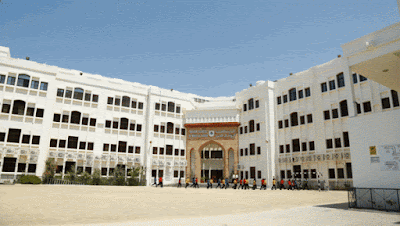
Indian School Al Wadi Al Kabir In Muscat, Oman

When I was two years old up to the age of four, for five mornings every week, at 7 AM on the dot, I remember being extremely unhappy. 

I remember clinging to my mother's hand. I remember looking at her with wide eyes, begging, pleading, often with a solitary tear, often silently, but screaming deep inside. On some days, the sadness and angst became unbearable for my tiny heart, and it gushed out in a mournful whisper:

"Mumma, main kab jaunga?"
(Mom, when will I go?)

I remember the afternoons of those unhappy mornings. When the Muscat sun was in its element, we heard the distant rumble of a bus engine, growing louder and louder like an omen. That was the first warning. My mother took a deep breath, chanted a few prayers and braced herself for pandemonium. I ducked for cover under our dining table, fingers plugged in my ears and eyes screwed up in anticipation. The bus came and went, and there was blissful silence for a few minutes. It seemed the danger had passed. I poked my head out of my shelter, ears still plugged, squinting through one eye to look at my mother. 

She still chanted soundlessly, knowing it was inevitable.

And then, with a screech that cleaved our home apart, our doorbell rang.

The earth shook as it rang and rang with a deafening din. Birds screeched in the distance. The dining table trembled, clothing me with sawdust and fear. Steel utensils fell to the floor, adding to the cacophony. My mother staggered through the world that was ending, eyes pinched against the bone-shattering clanging and opened our front door. 

A tornado of ebullience burst through, shaped indistinctly like my elder brother. For a while, we only saw a speeding blur that launched school bags, bottles, shoes, socks and books into every room it passed. Despite the wreckage it left in its wake, the twister chattered nonstop about this dreamland called school. Even when it settled, it yammered through mouthfuls of lunch, barely stopping to breathe. It boasted of dramatic cricketing feats and howled at uproarious pranks pulled on new friends. It doted on these lovely beings called 'teachers'. It spoke of all the adventures, friendships, happiness and love that I was missing.

Everything about it was irresistible. I was dying to go to this wonderland. I longed to be a 'big boy'. I longed to 'study' and answer important questions from adults like "What did you learn in school today?" and "What grade are you in?"

I remember the first time I visited my brother's school. I remember gaping at its giant brown facade, a small solitary figure swallowed by its vast shadow. The Indian School Al Wadi Al Kabir stretched for miles like the length of its name, like the meaning of its name. A giant fortress in the desert, a wadi unexplored, an adventure denied.

I remember it vividly, as it was the source of my unhappy mornings. On schooldays at 7 AM, my mother took us to the curb below our building to wait for my brother's school bus. As it rumbled over, I clung to my mother, my hands encircling her arm like vines on a trellis, beseeching for consolation. The bus conductor was a big, booming man named Prakash who smiled with his eyes more than his mouth. He put one giant foot on the road, with half of his body hidden in the minivan and the other half sprawling out like a genie from a lamp. He greeted my mother, winked at me, and beckoned my brother.

Faceless shrieks of welcome emerged from the shadows of the bus. My brother forgot his early morning tantrums in an instant. He vaulted in, flung his bag on his reserved seat and sat on his knees in reverse, facing the other boys. My mother and I waved at him as the bus rolled away, but my brother never waved back. He never looked at us. He was already deep in conversation with his friends. Peals of youthful laughter flitted through the bus windows as it sailed away towards another day of laughter, adventure and love.

"Mummamain kab jaunga?"

The pain was unbearable, unfair and suffocating. Time was my enemy. I asked my mother the same question every morning, usually with sad eyes accompanied by a tiny, broken whisper. I asked not to hear the answer but to soothe the throbbing ache in my heart.

My mother, to her credit, answered the same question for two years with unwavering love, pity and compassion. She didn't count the weeks, months or years till I went to school but rather the experiences I would have. She described the cartoons on my school bag, the shape of my water bottle. She listed the delectable delicacies she would put in my tiffin box and the loveliness of my notebooks. She painted a picture of classrooms and crayons so wonderful, so positive, so enchanting that I was already laughing by the time we were back home.

When I was four, it was finally time, and my excitement knew no bounds. We went shopping for my bag, water bottle, tiffin box, books and uniform. For days on end, I bounded around the house in full gear, carrying a Mickey-Mouse-themed bag and a camera-shaped bottle, as if school had begun early. I pored over my textbooks and empty notebooks, envisioning the letters I would write, the colours I would fill. I was finally going to that fortress I had dreamed about for years. I was so excited that I failed to notice the strained smiles on my parents' faces.

A week before my first day, my mother informed me that I wouldn't be going to the fortress. ISWK had constructed a small new kindergarten school, far off in the Muscat desert. Slightly taken back, I still maintained the spirit. After all, I was finally going to school, wasn't I? 

On my first day of school, my father insisted on dropping me in his car.

"No, I want to experience the school bus," I beamed. 

Years later, I discovered that my father had driven behind the school bus that morning, on the chance that I might start crying as kids on their first day invariably do. Yet Prakash reported to him that I sat silently on the tiny footrest they used as seats for the little ones, not speaking to anyone but just looking around with wide eyes, afraid to blink, trying to take it all in with just my sight, unable to contain a smile. This is it, here we go, my first day of school. I entered the class to begin my new life of happiness. 

In a few hours, I experienced the worst day of my life. 

On my first day, I sat amidst wailing girls and boys, miserably crying tears upon tears, filling up puddles by their feet.

"This? This is school?" I thought in disbelief for the entirety of those hours that stretched for years, for decades, for centuries.

Just an eternity of crying? An eternity of abject misery and pain? There had to be a mistake.

My mother beamed at me when I got home, hoping her son's day was filled with as much joy as he had hoped for years. 

"Kaisa tha pehla din?" she asked warmly.

I stared at her with suppressed tears, shocked by the tragedy, stumbling for words. I broke down, unable to comprehend if it was a huge mistake.

Over the weeks, as the kids' tears dried up and I started settling into school, I still felt incomplete. School was the formidable fortress my brother attended. This modest dull building in the middle of nowhere did not compare. My parents decided to carpool our morning ride, with driving duties split between my father and a friend's mother. Every morning, a car carrying four kids stopped first at the fortress, dropping off three of them. Then it sputtered deep into the desert towards my shanty, my nose pressed against the backseat window as I watched my brother and his friends disappear beyond the big white and blue gate.

Two years, my mother coaxed and cajoled. By the end of KG 2, my excitement was on the rise again. "Now, I begin school", I thought as I gambolled across the house. Once again, I failed to notice my mother's strained smile in my delirium.

A week before Grade 1, my mother sat me down to explain that ISWK had now shifted primary classes from the main school to expand intake. A dull new building, housing Grade 1 to Grade 4, had been erected next to my KG building in the extremities of the wilderness. My dream would have to wait for another four years.

The first year was easy since all four kids in the car headed to the same building. But a year later, we were back to dropping them off at the main school while I stared mournfully through the window. When I reached Grade 4, I was no longer oblivious. All year, I had heard the thudding hammer and grating saw. My mother sat me down to explain that they had added another floor to the primary school, to include Grade 5. 

Just one more year, she consoled, and I would finally go to the big school.

Nearly a year later, a month before I would have finally started classes in the main school, I had my face pressed against a car window once again. But that afternoon of April 7th was different. We were moving permanently to Dubai, away from the only apartment, building and city I had called home. 

I never walked through the gates of the main school, the fortress of dreams.

I haven't returned to Muscat ever since.

* * *

What have you done?

You either die a window seat loyalist or live long enough to see yourself picking aisle seats on flights (if you prefer the middle, then you'll be pleased to hear that there is medication for what you have). Ever since I reached the age of reason, I scoffed at window seats. Two minutes of good views on the fringes of hours of darkness were not worth perching like a tarantula with legs bent where they shouldn't be bent.

My loyalties started to sway on my annual redeye flights from Manchester to Dubai. As the flight descended on the lands of Arabia, I craned my neck from my aisle seat to steal a glimpse outside the window. Darkness was all I saw. Impenetrable, spreading all across and beyond, unrelenting in its uniformity. I yawned, stretched, hit my knee in the process, cursed aloud, whispered an apology, checked the time and returned to waiting. 

After minutes that felt like hours, hours that felt like years, I heard a whisper from a window seat. A child tugged his mother, pointing excitedly into the void. I craned forward once again. 

This time, I saw it.

Far off in the abyss, one small golden dot had blinked into existence.

Then another, and another. In a matter of seconds, like golden dominoes toppling into sight, lines of dots emerged at the horizon. Yet, there was structure in their formation.

In 1903, the Argonaut anchored off the shores of the Trucial States, as Lord Curzon did not deem the land worthy to set foot on. Instead, he welcomed the sheikhs onboard for a durbar. 

"We found strife here, and we have created order," he exclaimed bombastically.

A century later, peering out of an airplane window, I did see order in the desert. 

But it was not the British who had created it.

The dots were streetlights. They snaked out like tendrils, linking up with other patterns emerging from the sides. As we flew, the roads of the Emirates emerged thousands of feet below, awash with bright golden light, twinkling in the haze just like the stars in the heavens above. As I watched the child try to trace the lights towards the horizon, a destination was apparent. There was a purpose, a crescendo. With gradually increasing radiance, all paths led towards a giant golden dome of light on the horizon. It was something extraordinary, still hundreds of miles away, still indistinct, yet ominous in its presence.

It had the mark of a creator, divine and powerful. 

At that moment, I stopped craning my neck to look outside the window. I settled back into my inferior aisle seat, sheepishly muttering apologies to the passenger in the middle for nearly sitting on his lap. 

I sighed.

All year in Manchester, I lived a stranger's life. When you're a young student, it's easy to get lost in certainties. Of course, you are supposed to study, revise, party, travel and repeat it all over again. Of course, you are supposed to go back every semester. Going to school, moving up grades year after year, then going to university and doing that for another four is just part of the plan. 

You are supposed to do it. There are no big decisions to be made, no conscious thought.

I always lost myself in those certainties in Manchester. My past was safely ensconced away on the dark side of the mind, unused until further notice. I was connected faintly with friends, family and old memories yet detached. I was supposed to ignore it. There was no time or point. I had grades to achieve, memories to make, a life to live.

Those shackles weakened earlier that day when I first saw it.

I was standing at the airport departure gate, gaping at the object beyond the high glass windows. It was a gleaming, pristine aircraft with fluidic calligraphic lettering on its flank. It had welcoming colours of red, white, black and green on the rudder. 

At the other end of the world and in a completely different life, a convoy sent by my past. 

At that moment, I felt a shadow of a thought, almost a sense of deja vu, fledgling and innocent, not yet stirred into an opinion or emotion. 

That shadow of a thought grew as I watched the flight screens play introductory videos in Arabic. It grew as I fumbled for a grimy sim card, dumped unattended for a year in a spare spectacle case. It grew and grew as the flight speakers crackled with the melodies of the oud.

Finally, near the end of the journey, it happened. As I drifted in an ocean of twinkling jewels, in the sky above and ground below, the thought took shape. Before the pilot crackled landing instructions, stewards glided over collecting disposables, seats buckled and unbuckled, overhead carriages shut and opened, for a brief moment, I found peace, joy and silence before the chaos. 

I found order in the strife.

I was finally home.
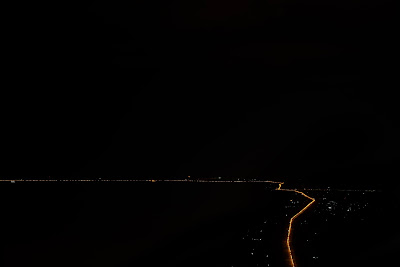
Dubai Lights At Night Aerial View

* * *

"One of man's oldest dreams is to turn the desert green."

In 1979, Queen Elizabeth II inaugurated the World Trade Centre with her royal scissors and majestic proclamations. 

In 2005, when my father's Toyota Camry entered Dubai, the World Trade Centre (now the Sheikh Rashid Tower) barely featured in a list of must-see places. Even if you sympathized with the former tallest building of the Middle East, what then of the others? Can you proffer your sympathy to the Emirates Towers? Deira Clocktower? Burj Nahar? Fish Roundabout? Deira City Centre? Burj Al Arab? Even if you squeezed them all in, with Dubai's prodigious love for the Marina or Palm, can you secure a spot for the Creek today? 

Where bedouins, or bedu, napped while floating on extremely salty waters to combat the heat. Pearling vessels floated out, carrying divers with noses clipped shut and weights tied to their feet. Dhows coasted in with lateen sails, bringing Persian wares, and soon the Persian merchants themselves. In 1938, it mediated the uprising of Dubai with the rulers in Bur Dubai and the rebels in Deira. The creek that built this sleepy fishing village and then divided it. 

Today, if you looked at Deira across the creek, you would see a set of geometrical buildings that were once the original skyline of Dubai: the convex National Bank of Dubai, cylindrical Rolex towers, triangular Chamber of Commerce and spherical Etisalat globe. If you stood on the opposite end, you saw the influence of migrating Persians in the Bastakiya district, badgirs jutting out of the mass, abras flitting voyagers across the channel.

They say big, old cities like New York or London or Delhi or Bombay feel like they are never yours. They make you feel lost. No matter what you do, those cities have existed for centuries without you and will continue to exist for centuries more. You are nothing but a temporary speck, a petal in a field, replaced every year. 

The Dubai I grew up in was neither big nor old. But it still wasn't mine. 

I was still lost. 

An orchestra conductor walks on stage and climbs onto a raised platform. He dusts his tuxedo, snaps his spotless white gloves and stands up straight. A momentary pause, and then he points the baton to his left.

I hear "This city has no future" from an uncle shaking his head, arms folded in defiance. We were celebrating his 60th birthday in his gilded mansion. He had lived more than half his life in the city of no future.

The conductor snaps the baton to the right. I hear "I don't have freedom here" from friends in a pub, irony effervescing like the froth of their beer, as iridescent spots of light sporadically light up our table.

The baton points to the middle. I hear "The market is down" from clients as they network at hotel lounges, pose for flashy awards and splurge on lunches and brunches. For two decades, I've never heard of the market ever being 'up'.

The baton swirls around, and I hear "There is not much to do here, there is no culture" from people who only visit the same cafeteria every evening for karak.

The tempo rises, the loudness gets painful. I hear "This place exploits workers," and heads nod in unison.

The tempo rises and rises. I hear "It feels fake, feels artificial," and "We have no stability," and "We can't call it home." The same routine, same tunes, same beats, repeated year after year. It gets faster and faster, building in crescendo, until I'm back under a table, ducking for cover, eyes screwed up. It gets louder and louder, with crash and clamour, and the world is ending. I stagger through the racket, ducking under vicious debris, to stop it the only way I know. 

By agreeing with everything I hear. I agree, piling dust and sand back on the shine, and just like that, there is silence again. 

You got me, I'm convinced. I'm eulogizing a showpiece city, foolishly inebriated by the romanticism of youth, delirious in Dubai. 

I must leave.

Yet, even in my self-imposed alienation, this city has a way of creeping up on me. A moment comes, which comes rarely but comes with force when it does, when I'm standing at Bluewaters, or the Palm Crescent or Sheikh Zayed Road, dwarfed by the magnificence of Ain Dubai or Atlantis or the Museum of the Future. A moment comes when I'm cruising dreamily on Garn Al Sabkha or Al Khail road, and the columns of Dubai Marina or Downtown Dubai rise into existence. As I get closer, the shapes begin to take form with the fluidity of a dimmer switch. The edges cut across the sky at astonishing heights.

The silhouettes sharpen, and I see it.

Spires of glass, glistening like crystals in reflected sunlight, piercing through the clouds. Higher, higher and higher. Towers of sparkling diamonds, testament to human ability and spirit, built on heat and sand.

At that moment, it hits me. The magnitude of this city's accomplishment, its audacity, its insolence. I'm struck by a single thought, one that surges through like a bolt of lightning:

What have you done?

How dare you do it? Who said you could do it? How many doubted you? How many never looked your way? Unable to come to terms with giving up their homeland to make more money, they tried to explore your darkness. They speak of history but never visit your forts, tombs, falajs or wadis. They speak of culture but never explore your art, architecture, poetry, music or theatre. They don't try your luqaimatshassan mattars, shawarmas, Pofak chips, date milkshakes, Areej juices or porotta wraps. They don't see the vintage Toyota or Lexus with decals all over, tinted black, still flaunted with pride. They don't feel the lethargic Friday morning lull when Dubai sleeps while the world still works.

Despite your apparent vices, they stayed and continue staying, grumbling publicly but afraid to confront the truth of going back home. 

You were the village on the Pirates Coast that a British general described as 'enjoying the safety of being undesired'. Now, they don't doubt, don't question, don't ignore. Now, they see, they marvel, they gape. Now, tourists stream in for luxury and leisure, descendants of guffawing generals stream in for tax-free havens. From barastis to the Burj, you defied the prophecy. The makers, the divine creators, locals and expats, hand in hand, creating order in strife, turning the desert green.

Once the city with no future, now the city of the future.

What have you done?

Today, I leave this city for New York. A city that is a grandfather of urbanity compared to Dubai's infancy. I leave to be a petal in a field of the quintessential metropolis, a grain of sand in the Rub' al Khali. At the cusp of this nation's 50th year, a month before its biggest global event in history, I leave it. As it sheds the final scraps of reticence and steps forward on stage announcing its ambition, I slip out the back door.

I left Muscat in search of a home. Despite a decade in Dubai, I'm still bothered by a question: did I find it here?

I don't know. All I know is that as I grew up, this city grew with me. We are entwined, this city and I, hand in hand, heart and soul. We still call it the Sana signal, but there is no Sana. The Sukh Sagar street but there is no Sukh Sagar. We still say it's next to 'Al Nasr Cinema' or 'Ramada Hotel'. Still reminisce Musalla Tower's dragon and Lamcy Plaza's clown. 

I marked the Burj Khalifa's ascension in my mind, like a mother notching her son's height on his bedroom wall. As I got taller, its spires reached higher. As I moved faster, the golden lights reached out even further, swallowing the desert. A mist, a shadow, a thought spread through this city and me, in our hearts and soul. It spread through the dunes, through the heat, taking in the barren wasteland to create hope, ambition and dreams.

We were the ones born in the dark who stayed around for the sun, this city's midnight's children. 

Can you take that away from me?

Dubai Skyline Burj Khalifa

* * *

If you liked what you just read then do help me by sharing this on social media platforms of your choice (Facebook, Twitter, Instagram, Reddit I ain't picky). We're all artists somewhere, in some field, and this is just my form of art that would truly find expression if more people get the inclination to read it.

Show your support corner:

- Share wherever you like (quick share buttons below for most popular social media channels) (sorry Orkut, you didn't make the cut)

- Follow Know Time, my talk show that focuses on celebrating curiosity: YouTube, Instagram, Twitter

- Know Time (Audio): Spotify, Apple Podcasts, Anchor

- Consider donating to support this blog and the Know Time project at Patreon

- Follow me personally on Instagram or Twitter (for frequent memes, and occasional screams) 


Similar articles:

The Silence In The Dunes: Read More

A City's Soul In Deira, Dubai: Read More

Master of all Nations, Citizen of None: The Life of a Gulf NRI: Read More

Saturday, 18 July 2020

The Silence In The Dunes

dubai curfew during the CoVID-19 corona pandemic

The balcony in our apartment extends to my room but doesn't open up to it. Instead of a door, I have to contend with a window overlooking my own balcony. I don't mind it as I would rather be in than out, given Dubai's propensity for heat and dust. But due to the strategic placement of my window, I am privy to most events in my balcony - which, we can all agree, is any young man's dream.

My role as the sentry of our balcony has its moments. When two birds get into a heated squabble on the railing, I am the first to find out. When our flimsy clothes drying stand tumbles over in the wind, I am the first to find out. Of course, by the time I rush outside to pick it up, our freshly washed clothes are beyond salvation from a thick layer of dust, but that doesn't undermine the fact that I find out first. 

Knowledge is power, after all. 

Occasional rack tumblings aside, the most significant event on our balcony occurs every morning. My parents like to begin their day sitting on our swing, sipping their daily chai in the morning chill, as they gently rock to and fro watching the sun rise over the horizon. Ironically, while I am aware of all trivial events in the balcony throughout the day, from tumbling dryers to squabbling birds, I am not privy to the only significant one in the morning. In the early hours of the day, when my parents commence their balcony routine, I am unerringly snoring away. I don't wake up until the sun is well and truly up (and blazing hot), and until my parents have already completed all their morning chores.

Even if I could manage to wake up at daybreak (a lost cause at this point, frankly), I wouldn't dream of interrupting my parents' daily tryst with destiny. It is their treasured time to themselves in the quiet hours of the morning, sipping chai with great relish. Their moment of solitude before the chaos of the day ensues. At that time, when the world sleeps, it's just them, their thoughts, confessions, supporting words and the chirping of birds. Over time, they have even developed a penchant for birdwatching, pointing out parrots, sparrows and crows with joy. Watching a flock of sparrows soar gracefully around our community adds to the poetry of the moment.

Due to the proximity of my window, at times I am abruptly woken by my father's loud rant on politics. My mother, on most occasions, is perceptive enough to shush him. 

"Thoda dheere bolo, Shalaj so raha hai," she admonishes.
(Speak softly, Shalaj is sleeping)

Soothed by the subdued voice of my father and the caresses of motherly love, I drift back to sleep quickly. 

On other days, I am woken by an uproar, stoked by my mother scolding my father on his latest act of mischief. On these days (which my father insists come rarely), I have no one to shush my mother in turn, as no man in our house would dare think that thought. So as my father gets his (deserved) rebukes, I have to endure them passively too, with my mother's fury effortlessly seeping through the flimsy window pane separating the scene of crime and my room.

However, on that day, that sultry morning in April, there were no loud voices on the other end of the window pane. Yet, I woke up. As I lay in bed, trying to will myself to sleep, hoping to catch a few more hours of blissful dreaming, my mother's sombre voice floated through the window.

"Kisi ne socha bhi nahi tha ki kabhi aisa hoga."
(No one had ever thought something like this would happen)

My father, in a rare moment, said nothing. The words sunk into a heavy silence, interrupted by their sips of chai and the setting of the teacups. Even the birds were quiet that day as if they were acknowledging our ruminations. No sparrows soared in the firmament. My mother's words hung with a certain heaviness, and unknown to her, seeped into our house, twirling and swirling, impeding my attempts to fall asleep again. Something about the way she said it exuded a force that I had hardly felt before. It was probably what woke me up in the first place. 

In 2020, just like that, my life had come to a standstill. 

Even my parents, just like the world around me, had gone quiet.

* * *

Life in Dubai had always been hectic. On the road, you were either speeding at 140, or being flashed out of your lane by someone who was or inching along in a logjam. The speed radars constantly flashed like paparazzi cameras. At work, you were writing an email, while on a call as you wolfed down your lunch in the pauses in between. In the malls, you were jostling crowds and standing in queues. You were guaranteed to make at least three rounds of a full parking lot before you spotted someone heading towards their car that you could tail. In the restaurants and shisha cafes, you were constantly checking your phone, setting alarms, rushing off to renew an expired parking ticket or being passive-aggressively booted out by the waiter trying to serve the customers queuing outside. At home, you barely got through your daily chores before you crashed out, ready to do it all again the next day.

At some point in the week, when two people would discover a rare moment of repose, the frenzy of this city would become apparent. Inevitably, one of them would sigh and lament: 

"Time flies too fast here."

Somehow, time as a dimension, as a continuum, followed different rules in Dubai. Everything about Dubai was about speed - growth, development, economy or vision. We got things done here, and we got them done fast. For a fledgeling city, one way to stand with giants was to convince them that it was precocious. I had watched the Burj Khalifa get constructed, floor by floor, week by week, as my school bus whizzed past it in the mornings. I had seen nothing but a sandy desert where the Dubai Marina launches cruises today. I had felt nothing but infernal heat at the spot where penguins roam in Ski Dubai today. I had seen nothing but the vast and unyielding Arabian Gulf at the spot where the Palm Jumeirah sleeps today. When we moved in, there was no Downtown Dubai. The tendrils of growth snaked out with alacrity from Bur Dubai and Deira, and today pictures of the city from the early 2000s are unrecognisable.

All of this, and more, in just a decade. 

I had not known a Dubai that knew anything else. It was a child prodigy trying to impress the adults with the exuberance of his youth. Those who couldn't, or wouldn't, keep up got replaced by ones who did. Every year that I returned to Dubai for vacations from university, it felt like I was visiting a new city. New restaurants and shops replaced my old haunts and new roads had emerged while older ones had vanished. New skyscrapers, new rules and new people were to be expected every single visit. The only constant was change. 

Every day, the city moved at breakneck speed, of that there was no doubt. 

But at what cost?

In the middle of that frenzy, we first heard a murmur. A virus had started to spread in China. Yet, we shrugged it off - somehow global events never passed through the Middle East. I had often felt detached from world events in this region - to my frustration in my teenage years, nothing major of interest ever happened here. In the 2000s, there were no rock concerts, cricket matches or movie premieres. On the other end, there were no wars, tsunamis, riots or earthquakes either. The disconnect came at a price but allowed us to enjoy a rare era of peace and stability. Global catastrophes felt like problems of the world outside, of which we remained aloof. 

When the swine flu pandemic ravaged the giants, we hardly noticed it. Our school simply put a tissue box in each classroom as a gesture of goodwill, and we carried on. When ebola ravaged Africa, it got honourable mentions in off-hand discussions at get-togethers but remained largely inconsequential. 

So when we heard a murmur, we forgot about it. This was a problem of the world outside. We continued zooming about, tangled in the chaos of city life. Then the rumours got louder, and it became a conversation starter. In March, something was afoot. Something mysterious, unseen and uncontrollable. Then suddenly, the news burst through - the fortress had been compromised. JLT went under lockdown, with One JLT roped off. That evening we went to buy groceries to find the shelves half-empty, with people stuffing their trolleys with every possible item in sight.

One by one, places started closing down. First, it was my gym, then the restaurants, then the hotels, malls, parks and beaches. The cases increased daily, the graph arcing upwards with brutality, hinting that it was still only at the base of the mountain. Darkness started to spread across the city, enveloping it, and seeping into our homes and hearts. Panic and anxiety took the reins. 

In April, the first curfew was announced. No one was supposed to be out late at night in a city that had built a reputation for a thriving nightlife. Earlier, whenever we used to head home late at night, my father would usually exclaim:

"Dekho sadak par iss waqt par bhi kitni gaadiyaan hai, kitni roshni hai."
(See, even at this time there are so many cars on the road and so much light)

Across two decades in Dubai, I have never seen the main roads deserted. Even at the darkest hour of the night, there was light. But in April, I saw them empty with not a soul in sight. Empty and desolate, even in broad daylight. As the cases kept increasing, the late-night curfew became a full day curfew. Pictures of a deserted Sheikh Zayed Road started circulating on WhatsApp. Daily commuters inured to its beauty were served a timely reminder. The emptiness revealed the road's inherent magnificence, its symmetrical majesty.

But, it was also equally haunting. It felt wrong.

As beautiful as Sheikh Zayed Road is, with its columns of skyscrapers standing guard like majestic sentinels that usher entrants into the city of the future, it deserved to be filled with cars, its curbs packed with pedestrians, the parking spaces occupied and the metro gliding past. If that road is the emblem of this city, then it needed to be perpetually in flux, with life constantly flowing down it like a stream.

That week, it was barren. Like the dunes that once rested in its place. After years of fooling time, we had started to go back. 

That was when it sunk in.

The silence hung over us like an iron curtain. For a while, experts believed that the virus might not survive in extreme heat. Ironically, very soon the sun, our eternal blaze, was blocked out by dark clouds. Thunderstorms, rare for Dubai and rarer for Dubai in April, slashed across the city. The pervasive gloom added to the curfew. We huddled at home, afraid of an unseen, unknown and unbeatable enemy. Even stepping out of my door into the building corridor felt like I was heading into the trenches of a war zone. Every person, door handle and item was treated with suspicion and paranoia. We set up a sanitisation space at the entrance of our home, to stop the virus at our doorstep whenever we stepped out. Anyone returning home had to wait for someone at home to open the main door and open all the doors on the way to the dedicated sanitising washroom. The footwear was left at the door.

Those who wished to drive in streets needed a permit, which was granted only once a week for essential tasks. My father, the sole family member to step out during the curfew, found only empty streets and barricades on the roads he once saw life and light even at the darkest hour. 

Even him, who had taken a bus through Delhi in the aftermath of the Sikh massacre in 1984, having described that as the darkest event he had ever witnessed with a scene of decadence and death trailing his wake, found himself surprised, at a loss of words even. Even for him, despite having lived in a world with Indo-Pakistani wars, communal riots and 9/11, it felt odd, felt wrong, to see his Dubai so desolate, empty and apocalyptic.

I had always associated this city with speed, activity and chaos. Not having known it to be anything else, I had taken it for granted, even vilified and complained about it. But it took the stillness, the gaping silence in the abyss, to show me that the city needed its speed. The hustle was so ingrained in the city's culture, that it was the culture. It needed its bright lights, large crowds and loud noises; a haven teeming with life. 

Without it, it felt wrong. 

For the first time in the millennium, Dubai had gone quiet.

* * *

Three months later, my parents' conversations on the swing have nearly returned to familiar territory. Once again, they swing lightly to and fro, sipping chai, while chatting merrily about their life, kids, local gossip, my father's job, his misbehaviours (some things never change, I guess) and to my extreme distaste, my marriage prospects.

I say nearly returned to normalcy because the virus is still with us. Refusing to be eliminated, it has become a part of our lives. It still persists as an underlying context in all those morning chai topics.

Even beyond our balcony, Dubai is nearly back on track. The roads are packed and there was a certain (albeit, short-lived) joy in seeing a traffic jam again. The parking spots are elusive again. The beaches, restaurants, malls and pubs are full again. The cases are on a decline and stringent measures are in place. 

Once again, I say nearly back on track. The mask is now a part of everyone's attire. Gatherings are still restricted, arenas are still shut and theatres are running at limited capacity. People largely stay distant, handshakes have thankfully been discarded (hopefully forever) and the huggers probably burst a vein every time they spot a friend.

The optimist would see the city half full. The pessimist would still see all the prevalent restrictions, covered faces and shuttered shops. Some of those shutters will never open again as we enter another recession. There will be hardships and with it copious amounts of blood, sweat and tears. Some darkness will still persist, inhibiting and oppressive. 

But this city, the only one that I can truly call home, will endure.

At this point, it is hard to predict when. But I know a day will come when the birds will fly again. When once again, as the sun rises while the world sleeps, my parents will wake to a Dubai filled with light and freedom.

Dubai Quarantine Curfew during CoVID-19 Corona Virus


* * *

If you liked what you read then do help me by sharing this on social media platforms of your choosing (Facebook, Twitter, Instagram, G+, Reddit I ain't picky). We're all artists somewhere, in some field, and this is just my form of art that would truly find expression if more people get the inclination to read it.

Show your support corner:
- Share wherever you like (quick share buttons below for most popular social media channels) (sorry Orkut, you didn't make the cut)
- Like the Instagram post here (and follow me personally, if you like my non-existence aesthetic)
- Follow me personally on Twitter here (for frequent memes, and occasional screams) 
- Like this blog's Facebook page here
- Follow the Blog Twitter feed here 
- Upvote this piece on Reddit here

Title picture credits: Naomi D'Souza

Similar articles:

The Pursuit of Happiness in Zanzibar: Read More

A City's Soul In Deira, Dubai: Read More

Master of all Nations, Citizen of None: The Life of a Gulf NRI: Read More

Sunday, 12 April 2020

The Pursuit of Happiness In Zanzibar

Zanzibar Tanzania

"The number one thing in life is to be happy."

Joseph, my tour driver, posits with the air of an adult trying to instil wisdom into a miscreant. He looks back at me, teeth bared with the grin of a person who anticipates appreciation. Being quasi-profound is part of his itinerary, I guess.

I nodded and turned to the window, not wanting to be rude but not eagerly looking to prolong the sermon as well.

Our vehicle was trying to push and shove its way through the pandemonium of Darajani Bazaar. Regiments of pop-up vendors selling spices, meat, fish, toys, electronics or assortments on carts lined the curbs. Under their nose, another rank of vendors with their goods spread out on a bedsheet. The spectacle was engrossing enough to not ponder further on Joseph's insistence that life was pointless if not for the quest for happiness.

I saw him. I heard him. But I didn't resonate.

Not then, not there.

* * *

Plattenbauten Michenzani neighbourhood in Zanzibar Tanzania

We were trundling through the Michenzani neighbourhood, infamous for its sprawling, functionalist apartment blocks. The Plattenbauten, or the large-panel system buildings, once well-touted icons of Zanzibar now stood in undeniable decadence. The taxi came to a stop outside a narrow alley. The driver motioned that the journey was over, and the rest would have to be traversed on foot. A labyrinth of narrow paths nestled between coral stone buildings was at our bidding. So, stepping past the maze of shops, alleys, barazas and restaurants, we entered Stone Town.

If there is a measure for the highest density of cultural significance, Stone Town would be up there. It is possible to walk past the House of Wonders, Omani Old Fort, Christ Church, House of Freddie Mercury and Palace Museum in just under fifteen minutes. For a man grown up in wide sprawling urban spaces with broad roads, Stone Town could have easily been agonisingly claustrophobic. In a new city, country and continent, it could have been inescapably foreboding.

It probably would have been, had it not been for the Zanzibari touch.

I am not new to this - the narrow gullies, impromptu gatherings, frolicking children and crooning hum accompanying daybreak chores. All are judiciously splattered across my homeland, India. Elements that civilised societies might find archaic, we found intimate. In Zanzibar too, the proximity of the buildings reflected the intimacy of its residents. The elderly hunched together, smoking cigarettes, playing board games and watching football on a small bunny-eared television set. The children scampered around with glee, running errands and chasing cycles. At sunrise each day, the women would grace their verandahs to sing folk songs of the ages.

Each morning in Stone Town, I was awakened by the thronging resonance of folk songs, ballads and hymns. Of its words, lyrics or meaning I had not the faintest idea. But it remained alluringly comforting, like the evocative lullabies of my childhood.

Stone Town was crumbling, of that there was no doubt. But in it, Zanzibar was truly alive.

Stone Town Zanzibar

I have seen it, time and again.

Local cuisines, folk songs, familial traditions or architecture: cultural roots are often entrenched with the poor, underprivileged and proletariat. All of them, unfortunate externalities of poverty. I don't advocate poverty, and never will. But as countries progress, people get richer and development becomes more than a buzzword, progress inadvertently ends up cleansing their essence for homogenous luxuries.

Conflict breeds culture.

I am aware this argument teeters on the borders of heated contention, so I must confine it to subjective experience. Personally, I have found greater happiness in local street food than at a luxurious restaurant. I have been beguiled by soul of local folk songs more often than mainstream hits. I have marvelled the architecture of traditional houses more than modern residential complexes. Invariably, it has been the art created in war, famine or depression that has evoked my interest.

Why?

I would wager that we created culture to escape. Through food, music or art, we were able to elope, albeit fleetingly, into an abstraction of joy, wonder and magic. The creation endures centuries, despite the transience of our indulgence in it.

An ethereal ecstasy shines through these cultural works of art. It is so rich, so deep, so pervasive that I, a mere bystander, am able to feel it, reach within and drown in it.

In Zanzibar too, it was in the cobbled alleyways of Stone Town, around the sizzling aromas pervading the Forodhani Gardens, the inimitable daladalas or under the inescapable trance of Taraab music that I got a glimpse of their culture. In those moments, I was no longer a tourist.

I was one of them.


* * *

"Hakuna matata."

My first foray into African lands brought with it the suspension of disbelief. 'Hakuna Matata' - a phrase the world resonates with The Lion King was found in plenty. It was uttered by waiters, vendors, hawkers, coolies and bellboys. At times, it started dialogue while in others it served as the end. It was found submerged in the waters, wafting over the plains or even brought down with the blessed rains.

The Zanzibaris intentionally overdid it. They uttered it as a 'hello', as a 'thank you', as a 'sorry' or as a filler for any word they deemed suitable. Why bother with the right word when you could just 'hakuna matata' it? They knew tourists associated Africans with this phrase - this is what they came to hear isn't it? So they rained 'Hakuna matata's all over until we were flooded with it.

Even for incidents that were undeniably and undisputedly a problem, the trembling Zanzibari could not get himself to admit it. As his lips began to shape the admission into existence, he would choke and bend over, fighting the indomitable spirit of African tranquillity. Sweat would pour down his face, and his eyes would silently plead for mercy but it was not to be. For I could have burnt down my hotel, stolen the crown jewels and burnt half the city to ruin, it was not in his nature to lament the languishing of life.

It had to be a 'hakuna matata'.

If, by some luck, you manage to engage a Zanzibari in conversation beyond his agenda - then on a very rare instance, you might find the discourse veering towards the ordinary struggles of daily life. You are no longer conversing as local and tourist or seller and buyer. For a fleeting moment, you are conversing as humans. But alas, before you could probe further, unseen sensory nerves snap and jolt the Zanzibari from their trance. A shake of the head, a near-instant change in demeanour succeeded by an exceedingly jovial 'hakuna matata'. A bounding injection of 'no worries' to compensate for a conversation that nearly got too morose.

It is not the Zanzibari way to mope over life, circumstances or problems.

But how could you not? The poverty you read about - it is true. The dilapidation, diseases and degeneracy - they are true. The children of Africa, emaciated beyond comprehension - all true.

They exist in a region beset with problems, yet they look past it daily to emulate a life of no worries and no problems.

Page Beach Zanzibar

* * *

Zanzibar stands for 'the land of the blacks'.

Sharif tears apart an achiote seed and spears his lips with the paste it exudes. He calls it the 'lipstick fruit', and as he flashes a wide grin with lips painted lurid orange, I have no qualms over the origin of the name.

Ali, his colleague and our tour guide at this spice farm, chuckles at our bewilderment. This must be one of his favourite parts of the tour. While Sharif beamed and pouted with orange lips, climbed coconut trees and made hats out of leaves, Ali found delight in our reactions. The spices stayed the same every tour, but the people, their stories and their reactions kept him going.

He was startled to learn that we were of the same age. Deeply layered strata of privileges assimilated to bring me to Zanzibar as a tourist on vacation, while he worked as a part-time tour guide and full-time computer science student. His dream was to create a website for tours in Zanzibar. He yearned to create a life where he could confidently propose to his lady love.

Ali or Sharif didn't deserve this, but they didn't know better.

Spice Farm Zanzibar

How could they not? They were doomed from birth by the colour of their skin, rather than the content of their character. The spices they proudly display to me sustain their livelihoods today. Ironically, these spices were also the primary reason they were set back in time. The abundance of resources was too hard to ignore for the world's colonisers, multiples at a time. A two-hundred-year Portuguese colonisation ended with the hegemony of Oman. The Sultanate of Zanzibar, central to the Arab slave trade, left a mark so indelible, so penetrative that you would still find glimpses today.

The Old Fort of Zanzibar need not be the only conspicuous reminder of erstwhile Omani dominion. The kummah, traditional Omani headgear, still adorns the heads of a large number of Zanzibari men. I found it strange that Zanzibaris would proudly flout the adornments of their oppressors. When I posed this query to Joseph, he looked to the skies with a grimace of helplessness. For a moment, the man preaching eternal happiness betrayed a profound sadness in his eyes.

"They think it was right. They believed in the Sultanate of Zanzibar."

Believed in it? Believed in the devilry of slave trade? The rationale for this is lost on me, but I cannot comment on it further. Surely, the intricacies of reasoning are beyond my understanding of the Zanj region. It is true that the Sultans also ended up abolishing slave trade. Zanzibar's growth under their reigns is well documented. The fact that it is an ancestral home to several Omanis further complicates the dynamic. It is best I leave my judgements unuttered, knowing fully well that in my own country Hindu nationalists believe in mob-lynching. Western countries have armed activists marching the streets despite a clear correlation between freely available guns and school-shootings, so it must be a matter of perspective.

I'm sure there must be some convolution to it all. I just couldn't see it, not when placed in comparison to the oppressive malevolence of slavery.

The Olduvai Gorge of Tanzania is often touted as the birthplace of homo sapiens. Nestled in the Great Rift Valley on the eastern Serengeti Plains, hominids began their evolution into hominins (ultimately into humans). In this gorge, palaeontologists discovered the first traces of stone tools along with signs of scavenging activities.

I found it ironic that Tanzania was the site of cognitive evolution along with slave trade at different periods in time.

The place that gave birth to humans was also the place where we lost our humanity.

Slave Monument Memorial Zanzibar

* * *

"The number one thing in life is to be happy."

I turn back from the window to find Joseph still beaming. The wide grin is boring into me like a dagger. It is commendable he finds the happiness in little things, in a place that has much to weep about. Misery, grief and hatred have been sown into Africa. For regions that consider themselves unfortunate for not having any natural resources, Africa is prime example of why they should be glad. Treasures of the land seduced colonisers, and Africans were left worse than they would have been otherwise. Fortune and fame, rats and cheese. 

In midst of it all, tattered, bruised and anachronistically impaired, the land of Africa. 

* * *

If you liked what you read then do help me by sharing this on social media platforms of your choosing (Facebook, Twitter, Instagram, G+, Reddit I ain't picky). We're all artists somewhere, in some field, and this is just my form of art that would truly find expression if more people get the inclination to read it.

You can like this blog's Facebook page here, follow the Twitter feed here, follow me personally on Twitter here, like the Instagram post here or upvote this piece on Reddit here.


Similar articles:

Sleepless in Sydney: Read More

The Bizarre Contradictions Of Thailand: Read More

A Magic Trick In Cambridge, UK: Read More

A City's Soul In Deira, Dubai: Read More